
Supreme Court Launches Landmark Hindi Judgment Summary Service
Supreme Court Launches Landmark Hindi Judgment Summary Service
Bridging the Justice Gap: Supreme Court Launches Landmark Hindi Judgment Summary Service
By [LawAcademy Editorial Team]
Published on [14-09-2026]
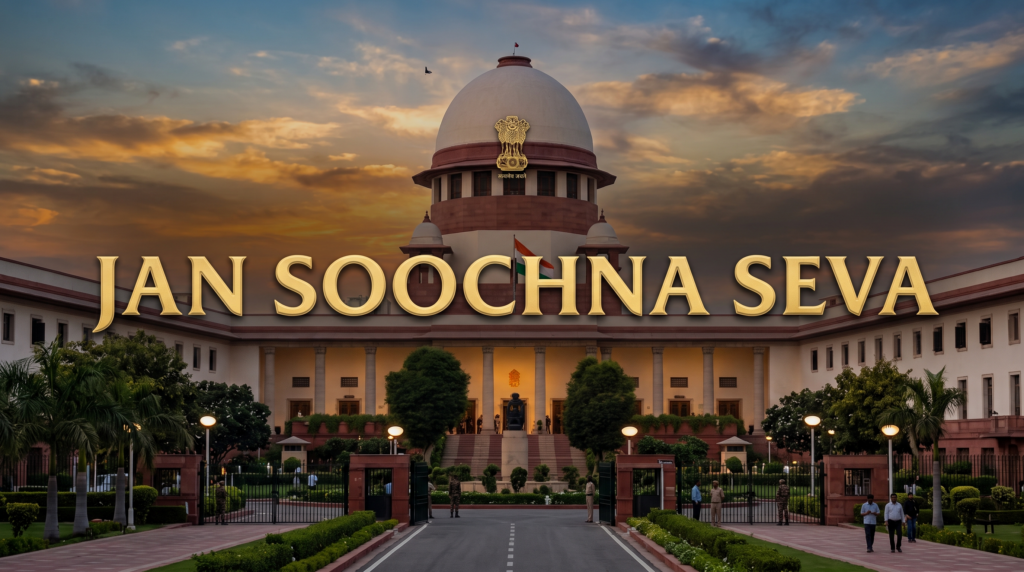
In a significant stride toward citizen-centric judicial transparency and accessibility, the Supreme Court of India has announced a landmark public information initiative designed to deliver simplified summaries of key judgments and court orders in Hindi.
Unveiled on the occasion of Hindi Diwas, the initiative directly addresses long-standing linguistic and comprehension barriers that often make the legal system feel distant and intimidating to the average citizen.
Key Highlights of the Initiative
- Multimodal Delivery: Selected judgments and court orders will be accompanied by plain-language written summaries, alongside daily 15-to-30-minute audio and video bulletins.
- Empowering Ordinary Citizens & Litigants: Strips away dense legal jargon, allowing individuals to grasp verdicts, their direct impacts, and subsequent legal steps without friction.
- Inclusivity for Differently-Abled Persons: The audio-visual format significantly enhances accessibility for visually impaired individuals and those who struggle with lengthy, text-heavy legal documents.
- Direct Access to Source Material: Each simplified summary will include a direct link to the official, full-text judgment for further reference.
- Expansion Across Regional Languages: While debuting in Hindi, the service will be rolled out across other scheduled Indian languages in a phased manner.
Demystifying the Law: From Complex Legalese to Plain Language
Supreme Court judgments shape national policy, constitutional rights, and everyday life. However, dense legal terminology and predominantly English-language rulings have historically created a knowledge gap between the apex court and the public it serves.
Under this new service, citizens will no longer have to rely solely on secondary interpretations or struggle through hundreds of pages of complex legal draftsmanship. The summaries will distill verdicts down to their core essence:
- What was the core dispute?
- What did the Court decide?
- How does the ruling affect the parties involved and the broader public?
To ensure total transparency, every bulletin and summary will carry a direct link to the original, authoritative verdict.
Universal Accessibility: Tailored for All
A standout aspect of this initiative is its deliberate multimodal design. By offering daily 15 to 30-minute audio and video bulletins, the Supreme Court is ensuring that access to justice is not limited to those with high literacy levels or legal training.
This feature is poised to be transformative for:
- Persons with Disabilities: Visually impaired citizens and individuals with reading difficulties will have equal, direct access to judicial outcomes.
- Everyday Litigants: People whose cases are actively moving through the system can track and understand apex court precedents without intermediaries.
- Rural and Semi-Urban Populations: Audio-visual broadcasts in familiar languages lower the barrier of entry for millions across the country.
A Vision for Linguistic Inclusion Across India
While the pilot begins in Hindi, the Supreme Court emphasized that this is merely the first phase. The service is slated to expand progressively to other regional Indian languages, ensuring that citizens from every linguistic background can access pivotal judicial decisions in their mother tongue.
“The objective is to make access to justice truly inclusive and to align respect for India’s linguistic diversity with judicial public information.”
What’s Next?
The Supreme Court confirmed that the service will officially go live as soon as necessary technical and editorial frameworks are finalized. As the country moves toward a digitally empowered judicial infrastructure, this initiative stands out as an inspiring model of how technology, plain language, and inclusivity can come together to bring justice closer to the people.